Our yard is full of native gardens and I love to watch them change throughout the seasons. In early May, the first hints of color come from spring ephemeral wildflowers poking out from beneath dried brown leaves. Their blooms are fleeting – here today and then gone the next once the trees are fully leafed. Next to arrive are the wilds – columbine, geranium and ginger, which each bring a different hue to the garden bouquet. In the early summer, we begin to see lavender-colored bee balm, pale pink roses buzzing with bees, and a jungle of green everywhere as the mid-summer bloomers get ready to shine.
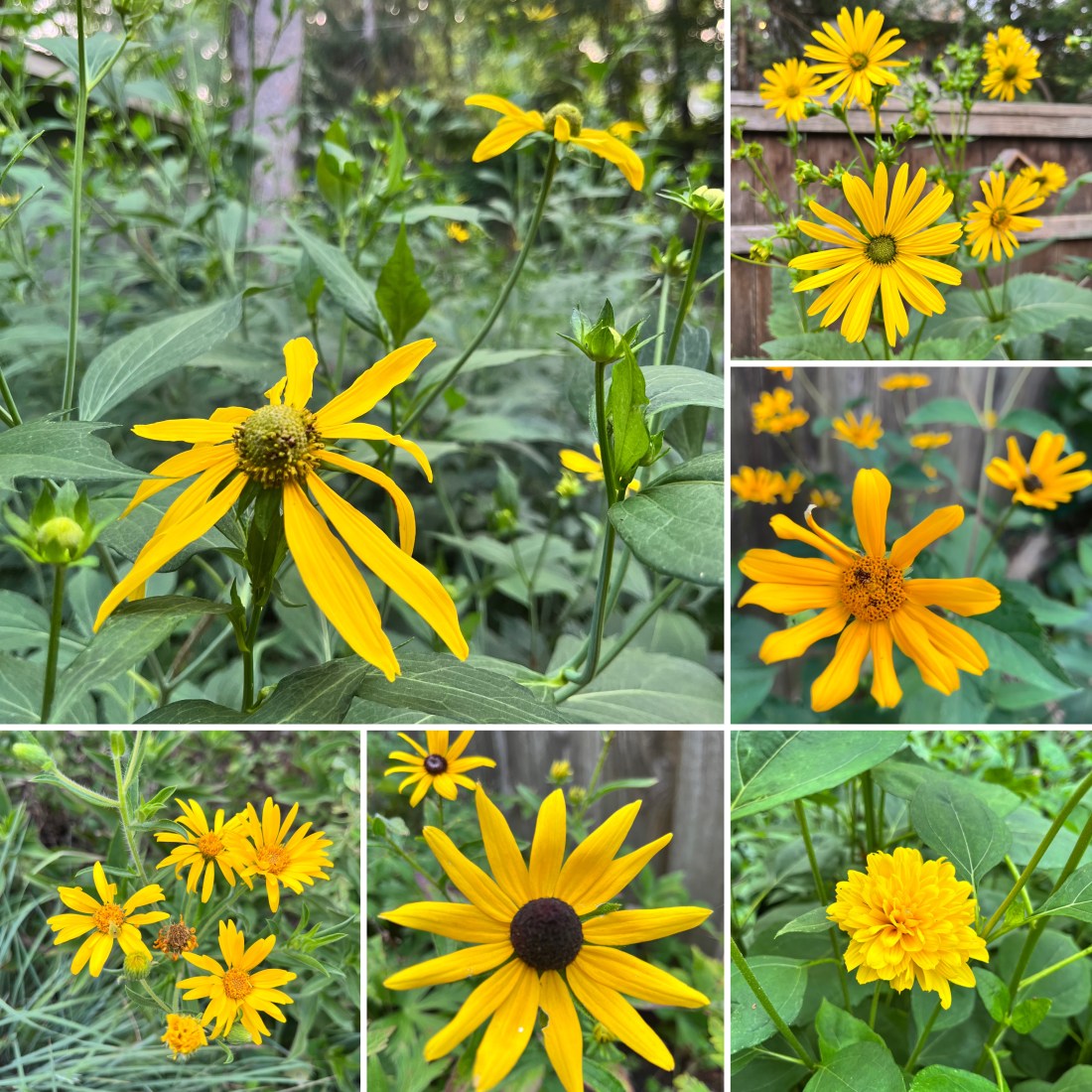
Then one day, it is yellow. All yellow.

If you peruse the Minnesota Wildflowers online field guide, you will find an impressive 303 species of plants native to Minnesota that all have yellow flowers. Some are familiar, such as marsh marigold, black-eyed susans, and golden Alexanders. But there are also more obscure native plants, including six species of beggarticks, ten varieties of sunflower, and astounding 15 species of goldenrods.
Once the yellows begin blooming, they quickly take over the gardens in every corner of our yard. If I look out my dining room window, I can see bright yellow goldfinches perched on the bright yellow flowers of the cup plant in our driveway. Outside my backdoor, the woodland sunflowers spill out of the raingarden and onto our porch. In the front boulevard, brown and black-eyed Susans compete for attention in a sea of golden asters.

In addition to brightening our mood with their cheery blooms, native plants provide many additional benefits. They are well-adapted to a variety of weather conditions and able to flourish whether the forecast calls for nonstop rain (as we’ve had this summer) or downright drought (like we experienced the past two years). Though they aren’t maintenance-free, you’ll never need to treat your native gardens with pesticides or fertilizers, and they’ll almost never need to be watered after they get established.
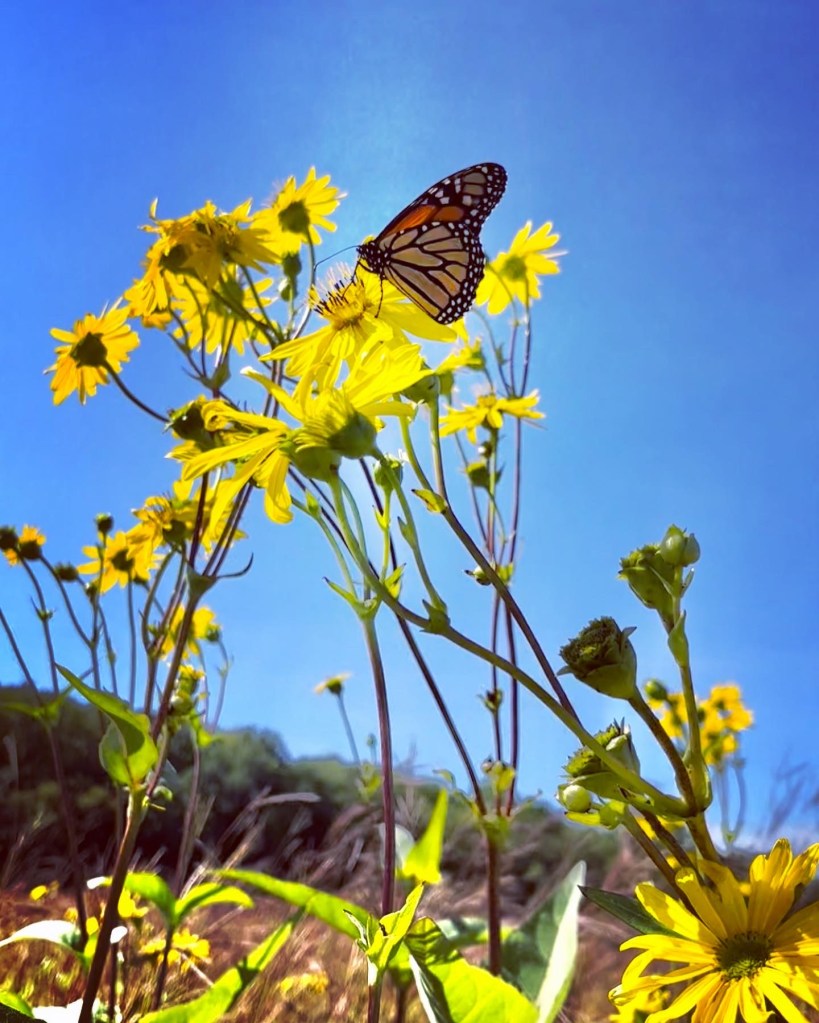
Most of the native plants in Minnesota have deep-root systems, which help them to break-up compacted soil and infiltrate water when it rains. These roots also enable the plants to survive fire, drought, and bitter-cold winters and provide excellent erosion control on shorelines and steep hillsides. Best of all, native plants have co-evolved with our native insects, birds, and wildlife. If you plant a native garden, you’re nearly guaranteed to see more butterflies and birds in your yard.

Looking for inspiration and advice on how to get started with native plants? Check out one of these upcoming events:
- Sat., July 20 (9am-4pm), Washington County Master Gardener Garden Tour. Visit seven showcase gardens in Oakdale, White Bear Lake, and Stillwater. Learn about watering wisely, landscape design, composting, growing veggies, crop rotation, companion planting, pollinator-friendly and native plants, how to prune trees and shrubs, prairie restoration, and more! $15/person.
- Tuesday, Aug. 13 or Thursday, Sept. 12 (5:30-6:30pm): Plants, Pollinators and Pints. Bring on the butterflies while you enjoy a pint at Dual Citizen Brewing in St. Paul! I’ll be the speaker at both of these events, which are hosted by Friends of the Mississippi River. Free.
- Sat., Aug. 17 (12-4pm): Buzzin’ Backyards – The Art of Bringing Nature to Your Door. Visit Carpenter Nature Center’s Wisconsin campus for a fun-filled afternoon with kids activities, guided hikes, presentations by native plant experts, and more. Free.
Find details about these and other events at www.mnwcd.org/events.

 East Metro Water